
How did smartphones take over the world?
First, only a small number used them. Then ‘everyone’ did. It just took some marketing. In the last newsletter I wrote about pricing, how do you do it for a product that has never existed before? That the value of Perficio is far far more than even our original price of $300 for our premiere home study course The Way To Wealth. Because whatever your financial goals are, Perficio will help you adroitly pursue them. Guaranteed. And that Auxillium slashed prices several times in order to introduce this revolutionary product. We know that once you experience it, you will love it, as the feedback has confirmed for us Testimonials – Perficio
Read and hear what people are saying about Perficio and its creator!
(Continued from the newsletter here)
That’s why we’re willing to make course discounts. Once you get started , you’ll wonder how you lived without it.
To use a smartphone properly, you need it as well as a cellular or internet connection. Auxillium’s The Way To Wealth is like a smartphone. Its connection is Perficio. It keeps you acting. It is a game changer.
Imagine Ben Franklin himself taught you everything he professed in his famous ‘The Way To Wealth’ – like you were his protege. Then, for as long as you liked afterwards; he coached you to implement everything he had taught you, towards YOUR relevant goals. In essence you would be another Ben Franklin. That’s what Perficio does.
Of course nothing like this has ever really existed before so familiarizing people with it is quite a task. We’ve got to do some marketing. After we soft launched last summer we still had a number of tech issues despite the many tests and iterations Perficio has already had. We still haven’t had the official launch party yet! Yet we’ve shown people Perficio works. They embody the 64 principles that Ben Franklin espouses. Perficio got them to do that in a number of ways, not the least of which is action.
It got them feeling great about themselves immediately as their self-esteem became high. This is what happens when you live according to your values! They have learned that they can trust us with the outcome that they are going for. They can trust us with their sensitive information. They can trust us to win!
People took varying times to complete the pre-course as well as the course. And that’s the whole idea! Everybody is different. That’s why I Perficio is completely automated and customized. And then it continuously coaches you to succeed as you pursue your goals with your expert knowledge. That’s what it all about. Welcome to the success Revolution. It has just begun!
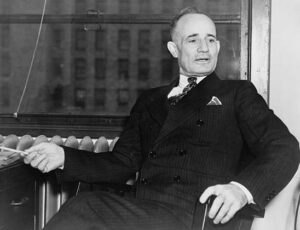
“Napoleon Hill was ‘the godfather’ of modern Self-Help. Perficio is his legacy.”
America’s first self-made man
This trimmed – down version of this article is provided to give a glimpse of the immenseness and influence of Franklin. Using Perificio you will actually embody the 64 principles he espouses in ‘The Way To Wealth’.
Benjamin Franklin pioneered the spirit of Self-Help in America. With less than three years of formal schooling, he taught himself almost everything he knew. He took the initiative of learning French, German, Italian, Latin, and Spanish. He taught himself how to play the guitar, violin, and harp.
(Continued from the newsletter here)
In 1727, Franklin started a group called the Junto, which he described as a Club for mutual Improvement. Participants—many of whom were young apprentices—suggested one or more Queries on any Point of Morals, Politics, or Natural Philosophy, to be discuss’d by the Company, and once in three Months produce & read an Essay of his own Writing on any Subject he pleased. They met weekly on Friday evenings, initially at a tavern and later in a rented room. When the Junto reached what Franklin considered an optimum size (12), he encouraged interested people to form their own groups, and they sprouted all around Philadelphia.
He prepared the 1758 Poor Richard and turned it into a pamphlet. Lacking fresh material, he rewrote some of his aphorisms. For instance: I will tell thee, my friend, what Poor Richard says, Employ thy time well if thou meanest to gain leisure; and, since thou art not sure of a minute, throw not away an hour. Leisure is time for doing something useful; this leisure the diligent man will obtain, but the lazy man never; so that, as poor Richard says A life of leisure and a life of laziness are two things. No, for as poor Richard says, Trouble springs from idleness, and grievous toil from needless ease. Many without labour, would live by their wits only, but they break for want of stock. Whereas industry gives comfort, and plenty, and respect. This little work was issued as The Way to Wealth, which went into nine Spanish printings, 11 German printings, 56 French printings, and 70 English printings. Moreover, it also appeared in Bohemian, Catalan, Chinese, Danish, Dutch, Gaelic, Greek, Polish, Russian, Swedish, and Welsh.
Franklin’s Autobiography
Part One of Franklin’s Autobiography—a pirated French edition—was published in 1791. Then came two English editions. There were 14 reprintings before 1800. Franklin’s selected works, including the Autobiography, weren’t published until 1817 because of delays by the aimless William Temple Franklin, who had inherited his grandfather’s manuscripts. The rest of Franklin’s manuscripts were stored in a stable and eventually recovered by the American Philosophical Society. John Adams expressed appreciation for what was available, because there is scarce a scratch of his Pen that is not worth preserving.
The book had significant impact around the world. Inspired by Franklin, the great German poet Johann Wolfgang von Goethe organized a Friday Club whose aims and practices were similar to Franklin’s Junto. Franklin inspired Simón Bolvar and José de San Martn, who helped people in South America achieve independence. Franklin’s Autobiography was a hit in Japan, where Fukuzawa Yukichi and other thinkers promoted his principles, which inspired entrepreneurs. The Florentine painter Gaspero Barbera published an Italian translation, explaining: At the age of 35 I was a lost man. . . . I read again and again the Autobiography of Franklin, and became enamoured of his ideas and principles to such a degree that to them I ascribe my moral regeneration. . . . Now, at the age of fifty-one, I am healthy, cheerful and rich.
During the heyday of American individualism, Franklin’s story was taken up by educators whose books sold in the tens of millions. For instance, drawing on the Autobiography, Noah Webster included an 11-page account of Franklin’s life in his Biography For the Use of Schools (1830). Peter Parley wrote a Life of Benjamin Franklin (1832). William Holmes McGuffey included selections from the Autobiography in his enormously popular Readers.
By the 1850s, the Autobiography had been reprinted almost 100 times. Between 1860 and 1890, Franklin was reportedly the most popular subject for American biographers. Many successful Americans testified about the impact Franklin had on their lives. The Autobiography inspired James Harper to leave his Long Island farm and launch what became one of America’s most venerable publishing houses (now HarperCollins). Yes, sir, Harper told a friend, the basis on which we commenced was character, not capital—and he had an artist paint a profile of Franklin into his own portrait. Horace Greeley, a poor boy who became the famous editor of the New York Tribune, declared in 1862: Of the men whom the world currently terms Self-Made—that is, who severally fought their life-battles without the aid of inherited wealth, or family honors, or educational advantages, perhaps our American Franklin stands highest in the civilized world’s regard.
Mark Twain noted Franklin’s influence on millions. Savings banks across America were named after Franklin. Altogether, reported American historian Clinton Rossiter, Franklin’s Autobiography has been translated and retranslated into a dozen languages, printed and reprinted in hundreds of editions, read and reread by millions of people, especially by young and impressionable Americans. The influence of these few hundred pages has been matched by that of no other American book.
But as individualism fell out of fashion, intellectuals belittled personal responsibility and self-help. For instance, novelist D.H. Lawrence in 1923: The soul of man is a dark vast forest, with wild life in it. Think of Benjamin fencing it off! . . . He made himself a list of virtues, which he trotted inside like a gray nag in a paddock. . . . Middle-sized, sturdy, snuff-coloured Franklin. . . . I do not like him. In recent decades, some professors focused on his personality, claiming the Autobiography was an elaborate pose, covering up the allegedly hidden Franklin—complex, elusive, secretive, intriguing. One professor talked about Franklin’s dark side.
But none of the critics deny that Benjamin Franklin achieved stupendous things. He championed personal responsibility, intellectual curiosity, honesty, persistence, and thrift—principles that have helped people everywhere lift themselves up. He nurtured an entrepreneurial culture which creates opportunity and hope through peaceful cooperation. He affirmed that by improving yourself and helping your neighbors you can make a free society succeed. His most glorious invention was—and is—the American dream.
(Credits: Original article written by Jim Powell, Source: fee.org)
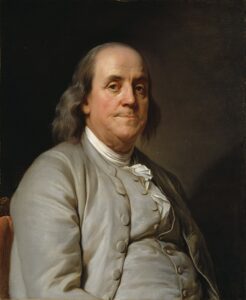
Benjamin Franklin was perhaps the grandfather of modern Self-Help.
Clip of Tony speaking with Personal Developer and Hypnotist Serena Stone about The Ripple Effect. Many tests and iterations. Reality wins every argument. Constant improvement is necessary. So is adaptation.