
The History of Self-Help
Hello, my name is Tony Petrozza. I was a life coach, now I work in technology. A funny thing about life coaching is that it often gets lumped in with Self-Help. Self-Help connotes that one party (the Self-Helper) is doing the helping. Since there are two parties involved in life coaching (or any other coaching) — the coach and the client — it can’t be Self-Help because there are two people actively involved. It’s OTHER-help. It’s professional help.
Critical points
- Self-Help by definition is the self, improving itself. If a professional helps, then it is something else.
- Personal development can be Self-Help but only when it is done just by the self. If an expert teaches their useful material for self improvement, that is not Self-Help but personal development. However if they write a book or make a home study course on that content, which a person does on their own – that is Self-Help.
- 12 Step fellowships such as Alcoholics Anonymous and Narcotics Anonymous are also sometimes considered Self-Help. This is primarily because they are amateur situations, unlike coaching. This adds to the confusion of what Self-Help is.
History
I’ve been intending to write a blog on the history of Self-Help for a long time. I’m finally helping myself to it. 😉 I’ll write about it factually; describing who, what, where, when, why and how. The different eras. How it got started. Where it’s going. I’ll write about other similar fields and movements. The diverse mentalities and themes. I’ll write about a variety of authors and their published work. About what Self-Help does. About what it doesn’t do. I’ll write about it’s problems and stigma. I’ll look at it different ways.
My father loved Self-Help and introduced me to it, in the 70s — and to this day, I love it. Even though it has a number of deficiencies. I remember him first teaching my older brother about it (he was more ready for it than I was). The three stand out authors, he championed in my memory are Dale Carnegie, Earl Nightingale, and Napoleon Hill. In fact, I still have my father’s copy of Hill’s tome Think and Grow Rich. I treasure it, especially Dad’s notes scribbled in it.
Even though self-improvement was around long before Hill was born, I consider him the Father of modern Self-Help. We’ll get into the paternities in a subsequent blog. I believe that for near my whole life I’ve had an advantage over most people. Because of something my father repeatedly told me. It’s a quote from Napoleon’s book:
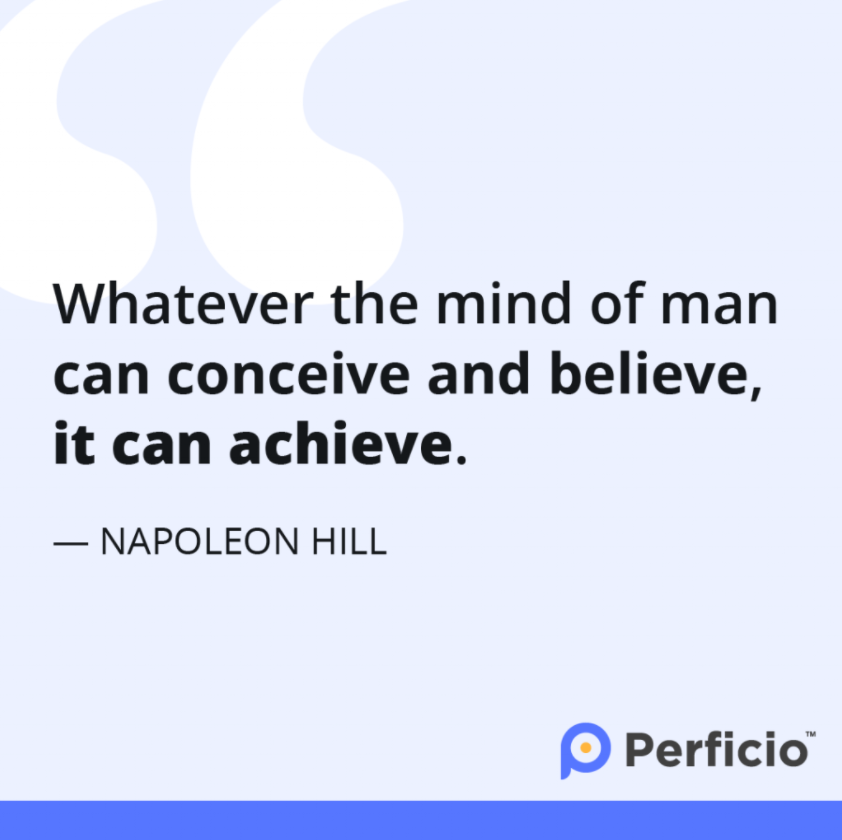
II gave my father credit for its origination! It took a while for me to realize it was Hill’s. Nonetheless, I never forgot it. My father instilled in me something special. Indeed, I consider Napoleon Hill a kind of spiritual father for myself. So I have both of them.
Goals
When we learn something we can do something with it. That’s what its for. What can be done? There are actually no unrealistic goals, only unrealistic timelines or deadlines. Our entire civilized world is composed of the goals of other people. Nonetheless, most people walk around believing some things they can do and some things they cannot. I believe a person can do anything. Given enough time. The key to success has always been, and always will be, persistence. However, there’s another side to that success coin – and that is learning. Specifically; learning from mistakes and what is necessary. Those are the two simple reasons why people fail in life. They don’t learn from their mistakes and they give up. Again, I’ve wanted to write for quite some time. There were a number of reasons why I procrastinated. They were both legitimate and illegitimate. I have learned that to do something, anything; one must start. Let’s see if I persist.
Definitions:
Self-Help noun
\ ˈself-ˈhelp \
: the action or process of bettering oneself or overcoming one’s problems without the aid of others
especially : the coping with one’s personal or emotional problems without professional help
epitome noun
epit·o·me | \ i-ˈpi-tə-mē
A typical or ideal example : EMBODIMENT
Example: the British monarchy itself is the epitome of tradition.
tome; [tōm] ‘tohm’ noun
a book, especially a large, heavy, scholarly one